
You are middle old Father William

Remember Lewis Carroll’s poem, You are old, Father William, from Alice in Wonderland?  Here’s the ever-wonderful They might be giants to jog your memory.

Nowadays, at least in the research world, Aged Bill is no longer just old. He is either young old, middle old or old old.

We discovered this when proofreading a paper on the elderly and falls for the Department of Public Health Sciences at the Karolinska Institute. Thanks to the greying of society, greater life expectancy and a far larger number of senior citizens, old is far too imprecise a term. Old age is now divided up into the three categories mentioned above. In Europe the subgroups are divided as follows: young old (60 to 69 years), the middle old (70 to 79 years), and the very old (80 years and older). In the USA, that land of eternal youth, young old starts at 65 and you aren’t old old until you reach 85.

It’s not just among the elderly that new sub-groups are developing. Until the 1950s there were children and adults. Then along came teenagers, adolescents empowered by post-war affluence and the widespread availability (at least in the USA) of cars in which they could go courting. No more dinner at home in the parlour with the parents for young couples. Now there’s a new group: tweenagers. Pre-adolescent children aged 10 – 13. In Kulturhuset, Stockholm they even have their own section of the libary: Tio – tretton. No adults or kids of other ages admitted.

What would Shakespeare make of all this?  In his As you like it there is a wonderful speech about the Seven Ages of Man.

http://lit.genius.com/William-shakespeare-the-seven-ages-of-man-annotated

We can still recognise the schoolboy  “creeping like snail unwillingly to school.” But the Bard would need to add at least four or five new ages to make the speech reflect our times.
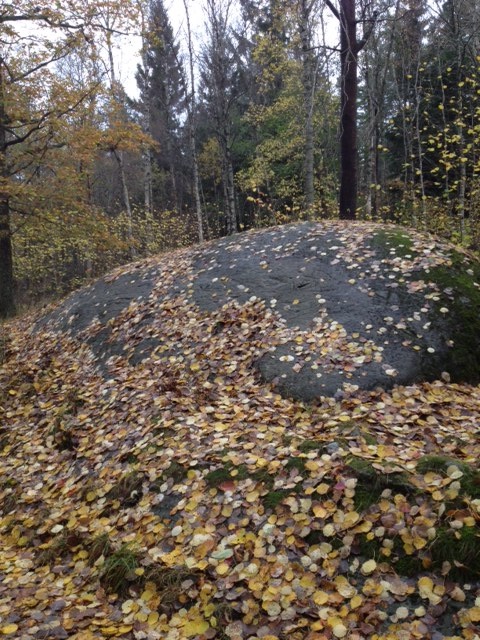


Sisu meets lagom

Stone


Gary Watson learnt  a new Finnish word this week: sisu. It sums up the Finnish national character and is extremely difficult to translate. Guts, perseverance, courage, sheer bloody-mindedness. The Finns have one of the most difficult languages on the planet in which they take great, almost perverse, pride. Learning Finnish certainly takes a lot of sisu!

I felt he needed it as he had the assignment of explaining Swedish business culture to a Finnish chap from Turku who is relocating to Stockholm with his family. A few times a year, we get jobs like this for an American company, Casus, who specialise in helping ex- pats who are moving to a new country to get settled in. Normally it’s for someone who has scarcely set foot in Sweden. Explaining Sweden to a Finn is a completely different kettle of fish. Two countries with a common history and many similarities but also a lot of subtle differences.

I stumbled across this excellent article about sisu which refers to it as “the Finnish stiff upper lip” which was an interesting variation. An excellent read!

https://emotionsblog.history.qmul.ac.uk/2012/10/sisu-the-finnish-for-stiff-upper-lip/

Finland was a province of Sweden until the Napoleonic wars, after which it became a Russian protectorate. It achieved independence in 1917. As a “young” country, it has a lot to be proud of. My personal favourites include:

Tove Jansson – creator of Mummintroll and the writer of several other fine novels for adults

Nokia – the rubber company that became world leaders on the mobile phone market

Ari Kaurismäki –  the wonderfully distinctive , hilarious and extremely Finnish film director

Lordi – the metal band that achieved the impossible and won Eurovision for Finland.
Untranslatable words that sum up a national character is a fascinating topic. Lagom (just right – Swedish), hiraeth (homesickness tinged with regret – Welsh), saudade (melancholy – Portuguese), Sehnsucht (longing- German), mono no aware ( awareness of transcience – Japanese) and duende (a magic feeling in response to a work of art – Spanish).

Guaranteed to get a conversation started with someone who speaks that language.